Silent killers can worry any homeowner, and for good reason and these tiny pests are often called “silent destroyers.” They can cause serious damage to our homes. Often, we don’t notice the infestation until it’s too late. Silent destroyers cause about $5 billion in damage to U.S. properties each year. Most homeowners’ insurance plans don’t cover this cost. This statistic highlights the importance of understanding, preventing, and effectively dealing with termite treatment. In this guide, we’ll cover everything you need to know about these silent killers. We’ll look at how to spot the threat and ways to create lasting solutions.
Introduction: The Persistent Threat of Termites
Termites are a year-round threat. They can silently eat wood, flooring, and even wallpaper, day and night. While they are adding nutrients to the soil, however, their feeding habits can badly damage our houses, so they might fall down. To protect our properties, we need to plan ahead and spot issues early. Waiting for visible damage means the problem is already serious.
Understanding Termites and Their Damage
To eliminate termites, we must first understand who we’re dealing with. There are more than 2,000 termite types. However, three are the biggest threat to homes: subterranean, drywood, and dampwood termites.
Types of Termites
- Subterranean Termites: Subterranean termites grow in moist environments. These are the most common and destructive termite species. They live in the soil and build mud tubes to find food. These tubes help protect them from the open air, just like our homes.
- Drywood Termites: Drywood termites live in dry wood. They don’t need soil contact to spread, unlike subterranean termites. They can be found in living places, walls, and furniture.
- Dampwood Termites: These termites love moist, rotting wood, just like their name says. Controlling these termites often requires fixing moisture problems rather than using chemical treatments.
Signs of Termite Damage
Termites move very slowly, silently, and invisibly , making early detection challenging. However, regular inspections can help us to spot issues. Here are common signs of a termite infestation:
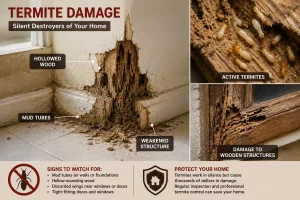
- Mud Tubes: These small, earth-colored tunnels protect the colony. Look for them on walls and foundations or within crawl spaces. They signal subterranean termite activity.
- Hollow-Sounding Wood: Subterranean termites eat through wood from the inside out. Tapping on wooden window frames, floors, or door frames can produce a hollow sound. This often means there is internal damage.
- Discarded Wings: These indicate that reproductive termites have left to establish new colonies. Clear wings found near windows, doors, or other entry points confirm a recent swarm.
- Frass (Termite Droppings): Termite droppings look like small, sawdust-like piles of wood-colored pellets. You’ll find them near damaged wood.
- Buckling Wood or Blistered Paint: Termite damage often resembles water damage. It can cause wood to bend, floors and ceilings to swell, or paint to bubble and blister.
- Musty Odor: A scent similar to mold can sometimes show a hidden termite infestation.
Keep in mind that by the time you see these signs, termites may have already been active for some time. This can lead to serious damage.
Comprehensive Strategies for Termite Treatment/Prevention
The prevention of termites from our homes is important. Different measures can make our properties less attractive to these dangerous pests.
Moisture Control for Termite Treatment
Termites, especially subterranean species, grow strong and healthy in moist environments. Removing moisture from our homes and the area around them is key.
- Fix Leaks Fast: Repair leaky faucets and water pipes right away. Don’t wait on small leaks. Also, check outside AC units. Clean gutters. Make sure the vertical pipe directs water at least a few feet away from the foundation. Slope the soil so water drains away from the house instead of gathering.
- Ventilation: Improve ventilation in crawl spaces to reduce humidity and keep vents free from blockage by plants. Use a vapor barrier in crawl spaces.
Eliminating Wood-to-Soil Contact for Termite treatment
Wood that touches the soil creates an ideal entry point for subterranean termites to gain access to our homes.
- Ensure Clearance: Make sure that there is a clearance of at least 6 inches between soil and structural wood and 18 inches of clearance between soil and any wooden part of the exterior structure of the home.
- Raise Wood: Stack firewood, lumber, and wood scrap at least 20 feet from the home and off the ground. Do not stack wood next to the house. Install Concrete Footers: Install concrete footers for decks and fences rather than putting wood directly in the soil. Remove Old Wood: Get rid of all old wood, stumps, and tree roots.
Landscaping and Exterior Maintenance
The landscape of your house could attract termites without doing anything.
- Mulch Control: Mulch doesn’t attract termites, but it holds moisture in the soil. Subterranean termites like moist places. Maintain a 6-12 inch distance between the foundation of the house and the mulch; don’t mound the mulch against the walls.
- Prune Shrubs and Trees: Prune shrubs and trees to keep them away from exterior walls of your house so they do not give termites an opportunity to enter the house.
- Seal Entry Points: Fill cracks in the cement foundation. Also, seal utility pipes that go through walls. This keeps termites out.
Regular Inspections for Termite Treatment
Even with useful prevention, termites can be doing something and difficult to detect early. Regular professional inspections are the main key to early identification and reducing repair costs.
Effective Termite Treatment Options
If a termite problem is found in one’s home, it should be treated immediately. There are different ways to deal with termites depending on the type of termites, the extent of their infestation, and the structure of the house.
Professional Termite Treatment Methods
Professional Termite Control services offer a range of advanced solutions designed to eliminate active infestations and provide long-term protection.
- Liquid Termiticides (Chemical Barrier): This method is easy to find. It stops termites. Liquid termiticides are injected into the soil around a house’s foundation. Experts do this to create a barrier. This barrier either kills termites on contact or stops them from entering.
- Bait Systems: Bait systems for termite control use bait stations. These stations hold slow-acting insecticides and are placed in important areas. Termites will eat the bait and carry it back to their colony. This leads to the slow death of the entire colony. Insect growth regulators are used by systems like Sentricon. They stop termites from molting.
- Fumigation: This process is mainly used for drywood termites. The process includes covering the building with a tent and using a special type of gas that will get inside all the hard-to-reach places inside the wood. While it is very effective in killing the existing groups of termites, gas cannot prevent future problems with termites and is combined with other processes.
- Spot Treatments: For small problem areas, experts have targeted options. One method is microwave termite treatment. It uses heat to kill termites in specific wood pieces. This way, no chemicals are needed. Special borate products keep wood safe for a long time. For new buildings and rooms, pre-treatments include putting insecticide in the soil. This is done before pouring cement.
Emerging Technologies in Termite Treatment
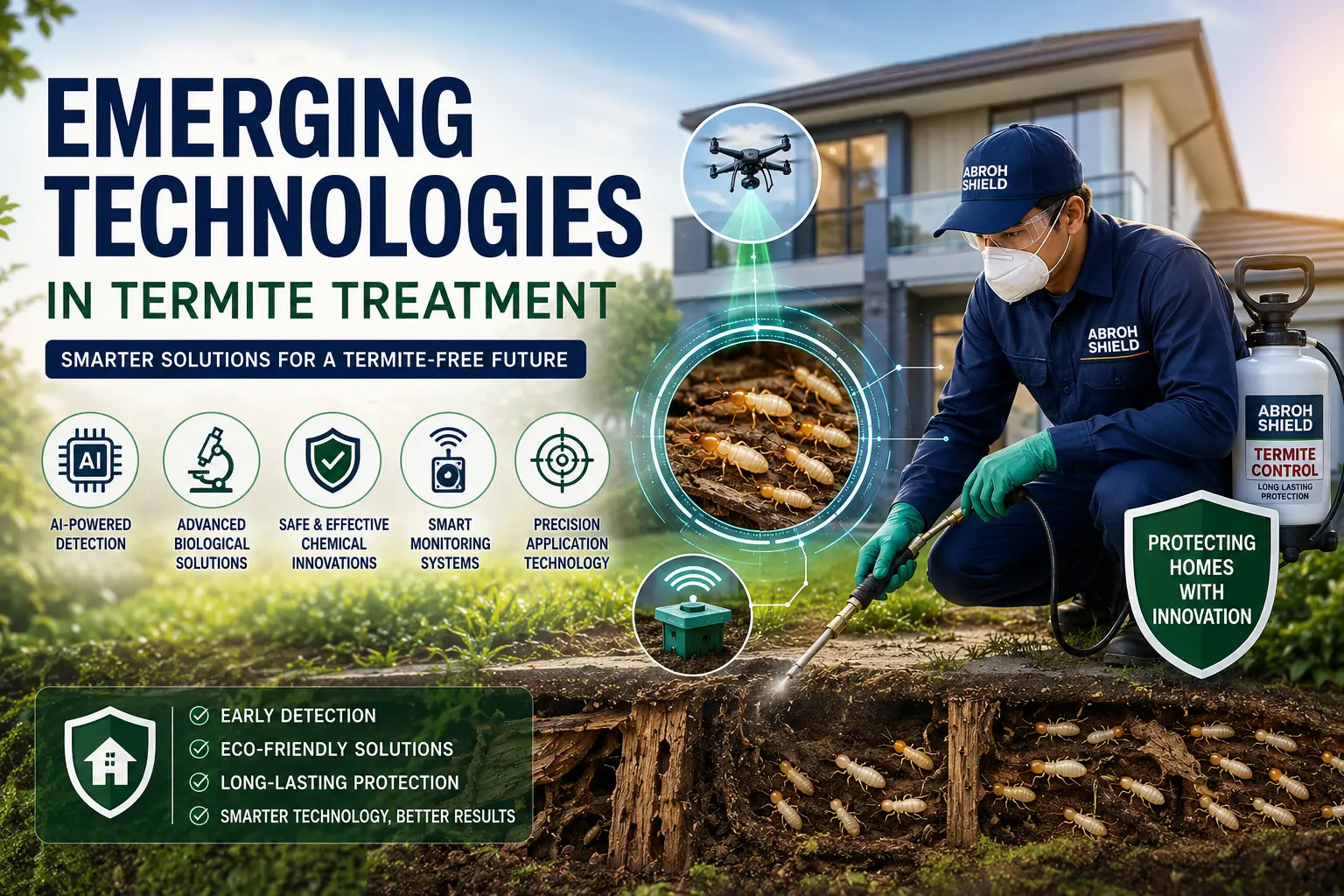
- AI-Assisted Detection & Remote Sensing: Drones have thermal cameras. They have hyperspectral sensors too. This technology detects termites in the ground or in wood. It does this without causing any damage.
- Biological Control Methods: Biological methods of control are becoming increasingly popular.
- These biological methods use special fungi and nematodes. They control termites naturally. They do not harm other animals.
- Chemical methods are getting better, too. New formulations are in the works.
- One improvement is bistrifluron. It stops drywood termites from growing new shells when they molt.
When to Call the Experts: The Limits of DIY Termite Treatment
Termite treatment on your own might appear as a very economical option for dealing with termites. But in fact, this approach is not always effective. Finding termites is tough. They often hide deep in wood or soil. Moreover, without appropriate equipment and chemicals, it is not easy to eliminate the entire colony of termites.
Why DIY Methods Are Often Ineffective for Termite Treatment
- Hidden Colonies: Termite colonies can cover a large area. They build nests deep in the soil, often as deep as 1.5 feet. DIY methods barely impact the colonies in that area. So, it’s likely the termite infestation will return soon.
- Lack of Expertise: Identifying termite species and the main source of an infestation needs a lot of skill. Most homeowners cannot distinguish termites from other bugs. Less than a third of all homeowners can correctly recognize the termites at a glance.
- Incomplete Treatment: Using over-the-counter sprays can only kill termites that have been spotted. However, using those sprays does not eliminate the entire colony of termites. A thorough treatment needs the right equipment and technique. This helps form an effective barrier against termites.
- Potential Risks: Some termite control products contain chemicals. These should be used safely. Otherwise, improper use of such products may result in harmful effects.
- Financial Waste: Buying DIY products for termite infestations that prove ineffective means further damage caused by termites to your property. Repair expenses are likely to rise drastically.
The Value of Professional Termite Treatment
Professional termite control companies offer detailed solutions that address the full scope of a termite problem.
- Thorough Inspections: Experts conduct detailed inspections to exactly identify the termite species and their infestation.
- Targeted Treatments: Professionals use commercial products with specialized equipment to apply treatments smoothly, reaching at hidden areas and ensuring complete colony elimination.
- Long-Term Protection: Professional treatments come with warranties with regular monitoring, providing lasting protection against infestations in the near future.
- Integrated Pest Management (IPM): Many professionals utilize IPM, which combines monitoring, bait stations, soil treatments, and barrier protection for a holistic approach to Termite Control.
A professional termite control company needs to be contacted as soon as any signs of termite infestation are observed. If your house has never been inspected within the last few years, then it is high time to do so. Early treatment will help prevent termite damage and save on repairs.
When looking for a termite control service, ask for three written estimates. This helps you compare options. Make sure the estimate provides a description of the type of treatment, types of chemicals used, area of treatment, warranty, and the price. There is no need to rush and make up your mind immediately upon receiving the first estimate. A reputable termite control company will give you sufficient time to make a decision.
Frequently Asked Questions (FAQ) About Termite Control
Q: How much damage do termites cause annually in Pakistan?
A: Termites cause an estimated 5 million rupees in property damage annually in Pakistan.
Q: What is the best time of year for termite treatment?
A: Termites work all through the year, and thus, one should always ensure that your home is protected against them. Spring is the best time for termite treatment. As the weather warms, termites get more active. Termites are often hard to spot. A yearly inspection helps find risks before they become a problem. Regular inspection and prompt treatment will be the best methods to ensure that your house remains safe.
Q: Are there natural or DIY termite treatments that actually work?
A: Some home remedies can help keep termites away or kill them. These include orange oil, neem oil, clove oil, garlic, and boric acid. These solutions only work on the surface and miss the hidden termite colonies. For this reason, the issue may arise again within a short while. Professional termite control services are very effective. They eliminate the entire colony.
Q: How long do professional termite treatments last?
A: The lifespan of termite treatments varies. Liquid termiticides can last for nearly ten years, while bait stations require regular professional inspection and monitoring to provide ongoing protection.
Q: What are the most effective types of professional termite treatment?
A: The most effective termite control depends on the specific termite species, the extent of the infestation, and the property’s construction. Chemicals within ground baiting systems are widely considered effective for long-term control and sometimes used for comprehensive protection.
Q: Is termite damage covered by homeowner’s insurance?
A: In most cases, termite damage is not covered by standard homeowners’ insurance plans. This makes prevention and proactive termite control even more critical.
Conclusion: Protecting Your Property Long-Term
Termites are a major and costly issue for our homes. That’s why they’re called silent destroyers. With some knowledge about these insects, we can protect our homes. Good preventive measures and professional help make a big difference. Keeping the area dry and preventing soil from touching wood is key. Regular inspections and professional Termite Control services also help. All these steps work in our favor.