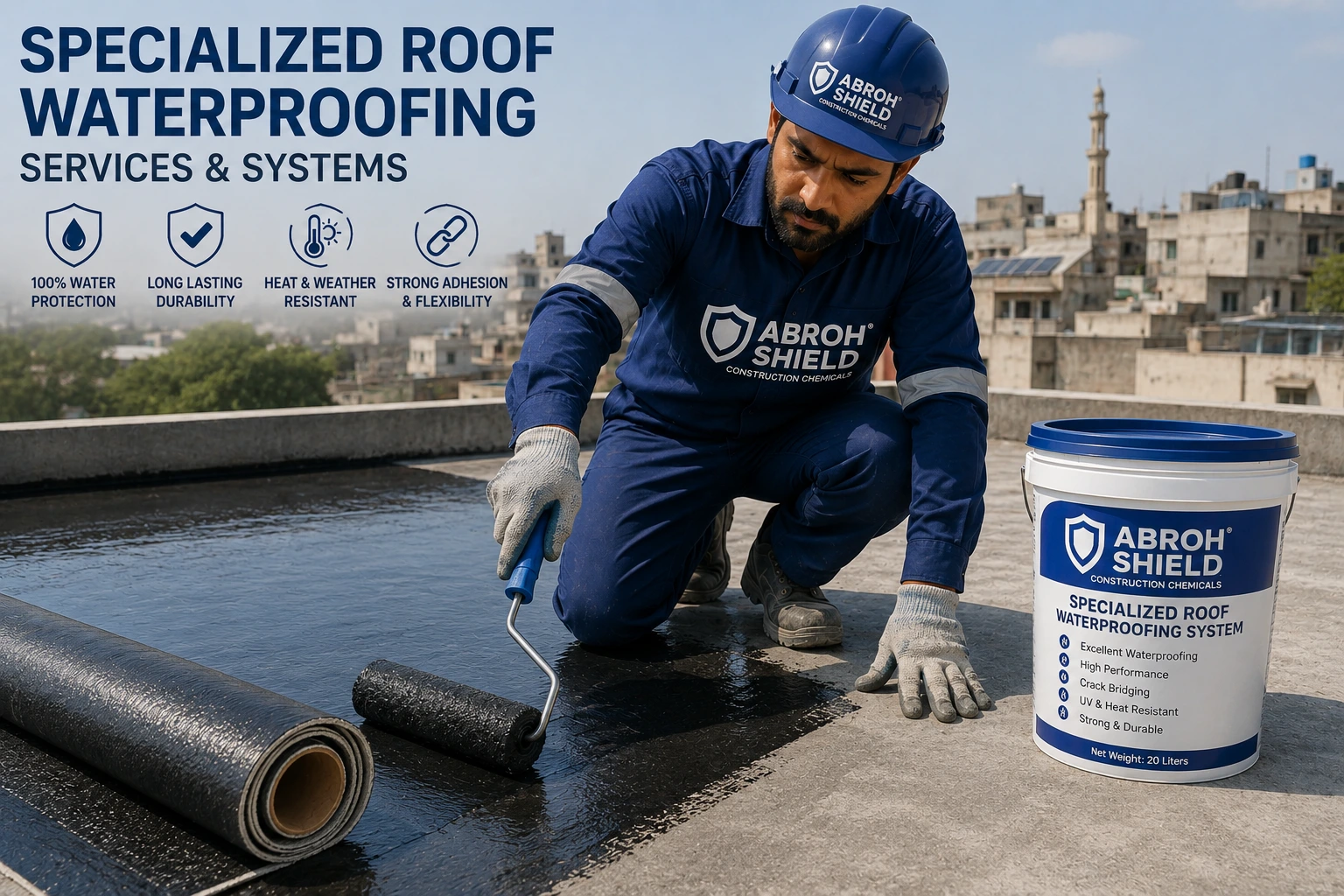
Civil engineering & architecture deals with designing and constructing a structure that will last for a long time. The construction needs good quality sand, cement, and steel. Nowadays, construction buildings are affected by many environmental factors. That is where Waterproofing Chemicals become important. These construction chemicals affect the physical properties of materials and their ability to perform such that they become more durable, stronger, and more resistant. The specialty chemicals change the characteristics of materials to make them more able to perform their functions better.
Construction chemicals for waterproofing involve using top chemicals and systems. It’s important to hire a reliable waterproofing company for offices, factories, and other buildings. In this article, we’ll discuss the chemicals used in construction. We’ll highlight why epoxy resin is crucial. Also, we’ll explain how Abroh Shield protects your roof from water for good.
What Are Construction Chemicals?
Construction chemicals are materials added to concrete, mortar, adhesives, and coatings. They can be mixed in before or after construction starts. Some of the main reasons why construction chemicals are critical in the building process include:
- Improving Workability and Strength: These materials boost concrete’s properties. They also aid in its consolidation. The concrete gains high compressive strength right after it’s placed. It will also keep getting stronger over time.
- Reducing Water Ingress: Stop capillary suction. This prevents external moisture from entering the structure and corroding the steel. Waterproofing contractors make sure the dry film thickness is even. This helps chemicals work better. It also removes weak spots that water pressure can damage.
- Structural Bond Strength: Concrete bonding agents and tile adhesives provide the necessary adhesion to stick concrete and tiles together.
Offering Long-Term Surface Resilience: This protective shield stops surface wear. It also defends against harmful environmental factors, like extreme heat and UV rays.
Major Categories of Construction Chemicals
To pick the best option for your project, you need to know what each construction chemical does. Understand their main functions first. Every project has unique needs. So, explore different categories and pick the top performer for each building stage. Finding the proper fit is crucial to achieving a durable, high-quality result.
1. Concrete Admixtures used as Construction Chemicals
Admixtures are chemical additives added to concrete mixtures during the mixing process. These compounds change the fresh mix. This makes the hardened concrete stronger and more durable once it sets.
- Plasticizers & Superplasticizers:** Concrete needs less water but must stay workable and cohesive. High-strength concrete is produced, which is dense and resistant to large volumes of stress. Reducing water content while maintaining a flowing, workable consistency achieves this result. This principle creates high-strength concrete that is both strong and highly durable.
- Accelerators speed up the setting time and early strength gain of concrete. These admixtures work well for cold-weather concreting. They let you remove forms early.
- Retarding admixtures: Slow the setting of concrete. This helps with long-distance mixing and continuous placement, avoiding cold joints.
2. Specialized Roof Waterproofing Services & Systems
Water is the number one threat to structural concrete. Water pooling on overhead slabs causes spalling, ceiling leaks, and serious rebar corrosion. High-performance roof waterproofing uses advanced elastomeric and polymer-modified chemicals. These create strong moisture barriers that are nearly indestructible.
- Liquid elastomeric membranes are coatings that you can roll or spray on. They cure into a flexible, rubber-like material. This makes them perfect for bridging expansion cracks in concrete.
- Crystalline waterproofing is a new method. It uses a chemical reaction to create solid crystals. These crystals fill concrete pores and create a permanent barrier against water.
- Polyurethane and acrylic coatings are top-notch, water-repellent options for the outdoors. They protect against moisture and UV rays. These coatings also help control temperature on flat or sloped surfaces by using reflective pigments to reduce solar heat gain.
3. Epoxy Resin & Protective Floor Coatings used as Construction Chemicals
Industrial, commercial, and residential surfaces face constant wear and tear. They endure abrasion, impact, and strong chemicals daily. Common concrete surfaces can get powdery, crack, and soak up liquids if they aren’t protected.
- Epoxy Resin Compositions: Pure epoxy and resin mixtures cure into a hard surface. They offer high polymerization and strong resistance to harsh chemicals. They also provide excellent pressure and water tightness.
- Seamless Epoxy Floor Coatings: These high-build resin layers help cover weak areas like cracks and joints. They prevent issues from bacteria, dirt, and moisture. Ideal for commercial kitchens, hospitals, and manufacturing facilities.
- Crack filler is a low-viscosity epoxy resin. It fills concrete cracks and offers long-lasting durability. This resin strengthens the surface. It also forms a waterproof seal to keep moisture out.
4. High-Performance Tile Adhesives & Grouts
Polymer-modified adhesives offer high bonding strength and flexibility. Manufacturers use modified synthetic resins to make them. They design these materials for better shear resistance and to prevent shrinkage. Professionals use this adhesive for low-porosity tiles, like porcelain and vitrified ones. It’s less likely to delaminate and avoids that unpleasant hollow sound.
- Contractors use epoxy tile grouts to seal tiles in busy and wet areas. Formulated with chemical-resistant resins and polymers, these grouts provide superior stain protection.
5. Repair Mortars & Structural Grouts
Regular mortar doesn’t work well on damaged concrete. It can’t bond to weak surfaces. Honeycombing, spalling, and carbonation cause concrete to become loose, brittle, or chemically altered. This weakens it, so it can’t hold regular mortar. For lasting repairs, remove the damaged parts. Then, use special repair mortars with bonding agents.
- Non-Shrink Structural Grouts: These are free-flowing materials made of cement or resin. They fill and bond machine bases, structural columns, and bridge bearings.
- Fiber-reinforced repair mortars are strong and shrinkage-compensated. They are ideal for structural repairs and concrete jacketing in large structures.
Comparison of Key Construction Chemical Solutions
| Category | Primary Ingredients | Typical Applications | Key Performance Benefit |
| Concrete Admixtures | Polycarboxylate Ether (PCE), Lignosulfonates | Foundation slabs, Ready-mix concrete | Maximizes concrete strength, reduces water ratio |
| Roof Waterproofing Services | Elastomeric Acrylic, Polyurethane, Bituminous | Flat roofs, terraces, podiums | Eliminates leaks, reflects heat, prevents rebar rust |
| Epoxy Resin Coatings | Bisphenol A/F epoxy and resin hardeners | Industrial floors, parking decks, labs | Dust-proofing, seamless finish, high chemical shield |
| Tile Adhesives | Polymer-modified cement, Epoxy resin | Interior/exterior floor & wall tiling | High bond adhesion, prevents tile pop-ups |
| Structural Grouts | Non-shrink cementitious compounds, Epoxy | Machine foundations, column repairs | Zero shrinkage, high structural load-bearing |
Why Choose a Professional Roof Waterproofing Company?
Using proper roof waterproofing is essential. However, using them the right way is what makes them effective. DIY repairs or unprofessional services can lead to coatings that don’t bond well. They may also peel off too soon.
Hiring professional roof waterproofing contractors will guarantee:
1- Surface preparation
Experienced contractors can blast, grind, and remove cracks. Priming the surface helps to ensure that all waterproofing coatings tightly bond to the material below.
2- Material selection
Our waterproofing contractor will help you choose the right chemical. He will look at the roof’s slope, its water retention, and how it handles temperature changes. The experts will guide you on the best membranes, crystals, or resins for your project.
3- Even dry film thickness
Our team uses materials evenly to achieve the right dry film thickness. This prevents weak spots that could lead to water damage.
4- Savings money in the long run
Applying materials correctly can save you money. This method helps property owners to save money. It also stops damage from poor waterproofing.
Final Thoughts
New buildings need protective materials to ensure safety and durability. These materials are used throughout the entire process. Construction chemicals protect buildings. These include concrete mixes, epoxy floors, and roof sealing. Using quality Waterproofing Chemicals and hiring skilled contractors will extend a building’s life. To keep a structure strong, use quality construction chemicals to prevent leaks. Also, hire a qualified contractor like Abroh Shield.