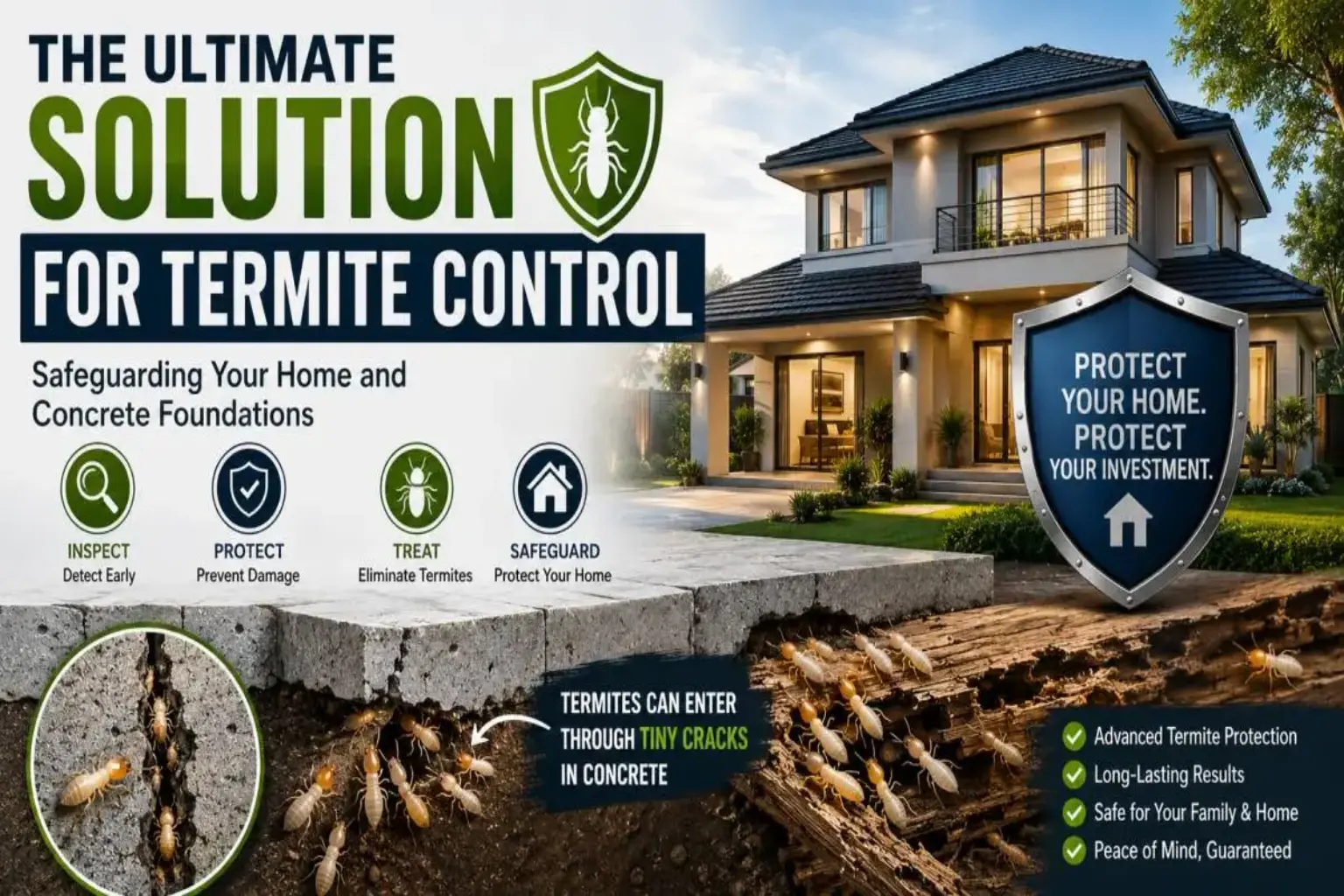
When people think about damage to their homes, they usually think about storms, floods, or plumbing leaks. There is another threat that is very destructive and works quietly: termites. Termites are called “destroyers” because they cause a lot of damage to homes and buildings every year. In this guide, we will tell you everything you need to know about Termite Control Products, especially when it comes to treating termites in structures.
Termites are very good at getting into homes and buildings even if they have foundations. Many people think that if they build their home on a concrete slab, it will be safe from termites. That is not true. Termites can easily get into the wood and other materials in a home through cracks and holes in the concrete.
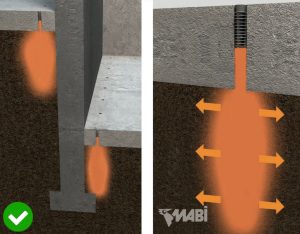
Image: treatment in concrete slabs via sub-slab chemical injection
Understanding the Threat: Why Termites target Structures
Termites are not bad; they just need to eat cellulose, which is found in wood, paper, and other materials. In nature termites help to break down trees and return nutrients to the soil. When they get into homes and buildings, they can cause a lot of damage.
The Main Types of Termite Control You Should Know
- Subterranean Termites: These are the common and destructive type of termite. They live underground in groups and build mud tubes to get to the wood in homes and buildings.
- Drywood Termites: These termites live in wood and do not need to be in contact with the soil.
- Formosan Termites: These termites are very aggressive. Can cause a lot of damage to homes and buildings.
Because subterranean termites come from the soil, it is very important to protect the area where the soil meets the foundation of your home, especially where the concrete meets the ground.
The Concrete Myth: Can Termites Really Penetrate Concrete?
Many people think that concrete is a way to keep termites out of their homes. That is not true. Termites cannot eat through concrete, but they can get into the small cracks and holes in the concrete.
How Termites Bypass Concrete Foundations with Termite Control
- A concrete foundation of a home can settle and get small cracks. Termites can get into these cracks and holes.
- Pipes and utility lines: Where pipes and utility lines go through the slab, there can be small gaps that termites can get through.
- Cold joints: When concrete is poured in stages, it can create cold joints. If these joints are not sealed properly, termites can get in.
- Form boards and stake holes: If there are form boards or stake holes near or under the concrete footings, termites can get into them and then into the home.
This is why it is very important to treat the areas around your home for termites.
What Is Termite Control? How Does It Work?
When subterranean termites get under or inside a slab, you need to use a special treatment to get rid of them. This treatment is called slab chemical injection or concrete liquid barrier treatment.
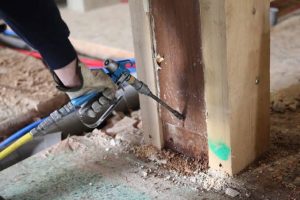
Image: Applying a high-pressure liquid termiticide treatment.
Step-by-Step Breakdown of Concrete Termite Control
To treat termites in concrete, you need to follow these steps:
- Inspection and mapping: A professional needs to look at your home and find all the areas where termites can get in.
- Precision drilling: The professional will drill holes in the concrete slab to get to the termites.
- Sub-slab chemical injection: The professional will put a liquid into the holes to kill the termites.
- Hole sealing and refinishing: After the treatment, the holes will be. The area will be fixed.
Termiticides: Repellent vs. Non-Repellent
There are two types of termiticides: repellent and non-repellent. Repellent termiticides keep termites away. If there is a small gap the termites can still get through. Non-repellent termiticides are better because they kill the termites without them even knowing it.
Core Strategies for Complete Termite Control
To keep termites away, you need to use different methods.
- Liquid soil barriers: This is when a liquid is put into the soil around your home to keep termites away.
- Termite baiting systems: This is when special stations are put into the ground around your home to attract and kill termites.
- Wood borate treatments: This is when a special solution is sprayed on the wood in your home to keep termites away.
| Control Method | Primary Use Case | Speed of Elimination | Longevity |
| Sub-Slab Injection | Active infestation under concrete floors | Fast (Days to Weeks) | 5 – 10 Years |
| Perimeter Trenching | Exterior soil protection | Fast (Days to Weeks) | 5 – 10 Years |
| Bait Stations | Ongoing monitoring & colony elimination | Moderate (1 – 3 Months) | Continuous (with service) |
| Borate Treatment | Bare wood during construction/renovation | Preventative (Immediate contact) | Lifetime of the wood |
Early Warning Signs of a Termite Control Infestation
If you see any of these signs, you might have a termite problem:
- Mud tubes on walls or footings: These are small tubes made of soil and wood particles that termites use to get to the wood in your home.
- Discarded swarmer wings: These are the wings that termites shed when they fly away to start a colony.
- Hollow-sounding wood: If you tap on the wood in your home and it sounds hollow, it might be because termites have eaten away the inside.
- Blistered or bubbling paint: If the paint on your walls is blistered or bubbling, it might be because termites have gotten into the wood and are causing moisture to build up.
- Frass (termite droppings): These are piles of sand-like pellets that termites leave behind when they eat wood.
DIY vs. Professional Termite Control
It is not an idea to try to get rid of termites on your own. You need a professional to do it correctly.
Why DIY Methods Fall
- Lack of specialized equipment: You need special equipment to get rid of termites, and most people do not have it.
- Misidentifying entry points: It is hard to find all the places where termites can get into your home.
- Improper chemical dilution: If you use the amount of chemical, it might not work, or it might be bad for the environment.
The Value of Professional Termite Control
A professional can help you get rid of termites with termite control. Keep them away. They have the equipment and know how to use it.
Proactive Habits to Keep Termites Away
To keep termites away, you need to do a few things:
- Eliminate moisture accumulation: Termites need water to survive, so you need to make sure that your home is dry.
- Remove soil-to-wood contact: You need to make sure that there is no wood in contact with the soil because termites can get into the wood that way. Never let soil, mulch, or wood chips touch your home’s siding or the wooden parts that hold it up. You need to keep the area around your home clean and clear. Make sure there is a gap of least 6 inches between the soil and the bottom of your home’s exterior siding.
- Store Firewood and Lumber The Right Way
- Keep firewood, wooden pallets, and scrap wood off the ground and away from your home. Store them at least 20 feet away from the outside walls of your house. Do not forget to keep cardboard boxes from your home too.
- Fix Cracks In Concrete: Check your home’s foundation, garage floor, and driveway every year. Look for cracks and gaps. Use quality filler to fix these cracks before termites can get in.
Final Thoughts
Termites are very strong. Can cause a lot of damage. They do not have to hurt your home. If you take care of your home and fix problems when you see them, you can keep it safe. Termites can get into homes with foundations. So do not think that your home is safe just because it has a foundation.
If you want to keep your home safe from termites, you should get help with termite control. This includes treating the slabs around your home for termites. This is an idea whether you have termites now or just want to prevent them from appearing. It is one of the things you can do to keep your home valuable and have peace of mind. Termite protection is important for termite prevention. By taking care of termite problems, you can protect your home. Your termite protection will be strong. For more information, please visit us.